Roman I-Sim - The Roman Image Simulator

Roman I-Sim is a Python wrapper of GalSim that has been specifically designed around Roman's Wide Field Instrument (WFI) imaging mode specifications to simulation realistic, pipeline-compatible WFI data products.
In the following series of articles, we provide users with a high-level view of the Roman I-Sim tool, its capabilities and limitations, as well as some use cases and tutorials.
Software Freeze: To ensure a stable user experience, updates to certain Roman tools will be suspended from June 28, 2026 through commissioning. Exceptions may be made for urgent fixes. Users will be notified of any releases made during this period.
Roman I-Sim in a Nutshell
The Roman image simulator, or Roman I-Sim , is a Python wrapper of GalSim (Rowe et al. 2015) that has been specifically designed around Roman's Wide Field Instrument (WFI) specifications. Roman I-Sim makes use of the official calibration reference files stored in the Roman Calibration Reference Data System (CRDS) and of STPSF point-spread function models to simulate realistic Level 1 (L1) and Level 2 (L2) WFI data products, as well as idealized scenes called "Level-3" ("L3", not to be confused with the true Level 3 data products made with romancal ), in imaging mode only.
Roman I-Sim can simulate all 18 WFI detectors through all available imaging optical elements. Simulations take advantage of GalSim to precisely render scenes (see the GalSim Documentation for more information), as well as of Roman-specific multi-accumulation tables, to generate uncalibrated resultants (L1), calibrated rate images (L2), and idealized Roman-like representations of astronomical scenes ("L3") as ASDF data products.
Roman I-Sim is the recommended Roman image simulator for high-fidelity, realistic WFI L1 and L2 data products in imaging mode.
Figure of Roman I-Sim Full-frame Galaxy Field
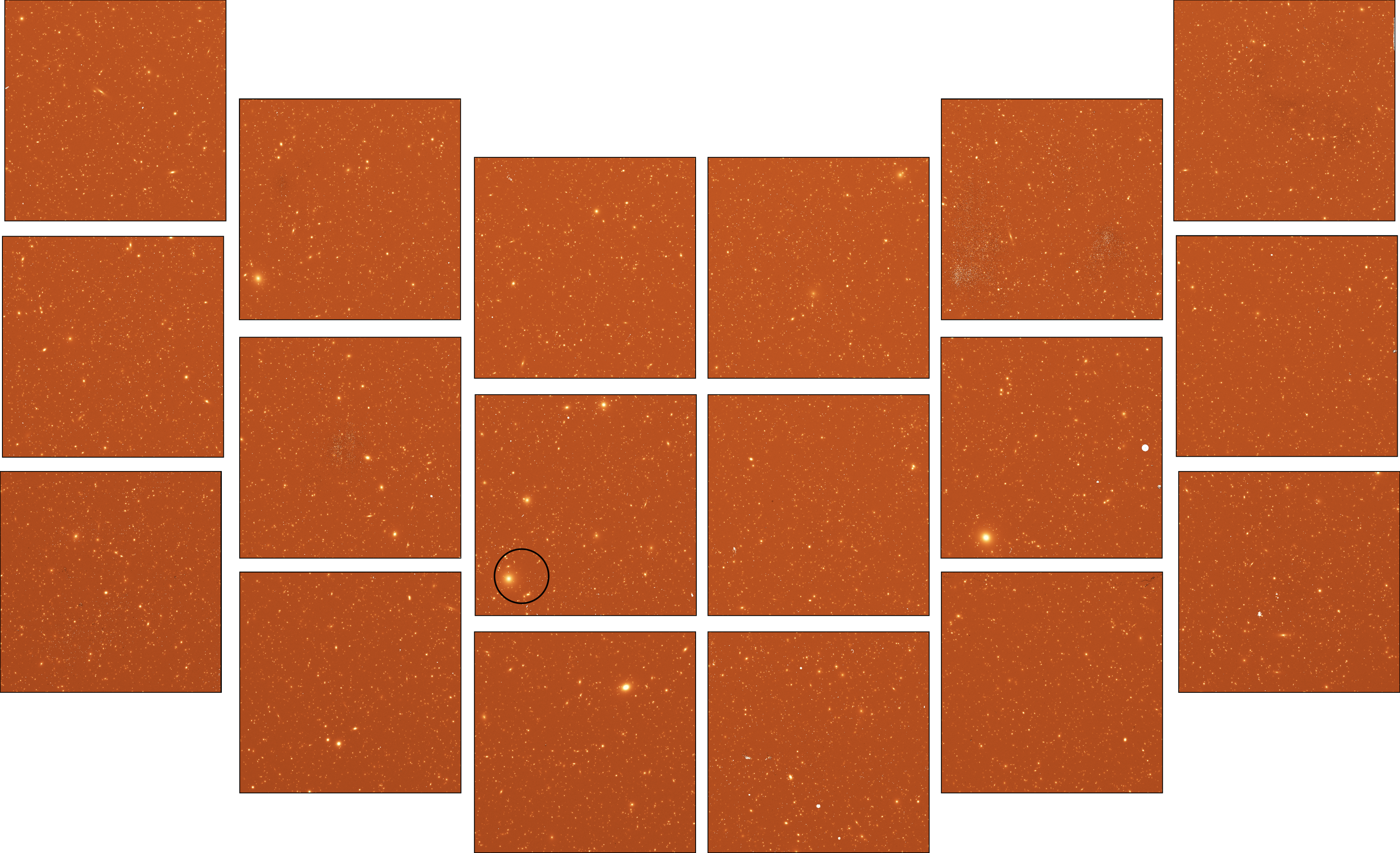
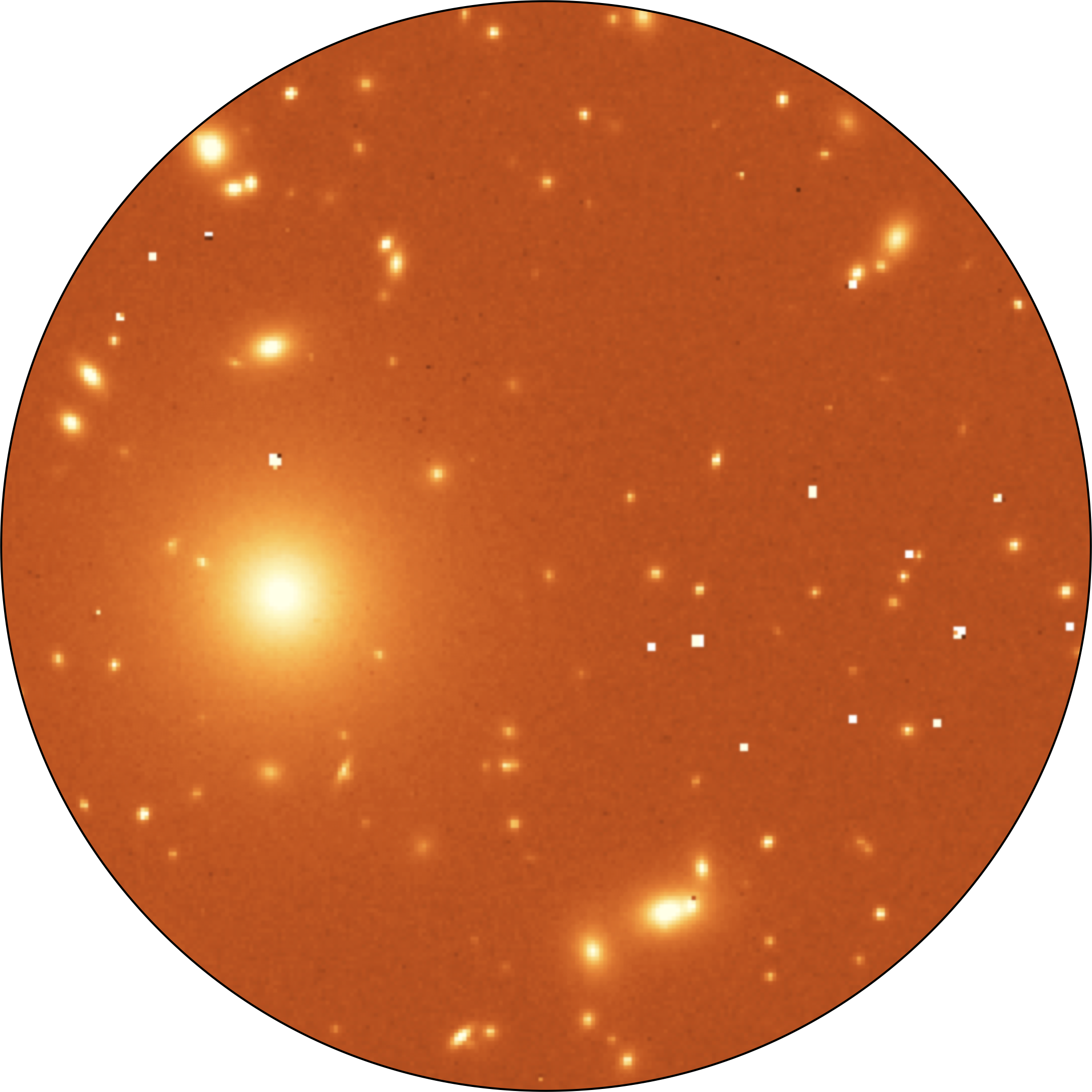
A full-frame view of a level-2 simulated image of a galaxy field is shown on the left as seen through filter F158, made as a collage of 18 individual runs of Roman I-Sim on the 18 WFI detectors. The encircled region (radius = 500 pixels or 55 arcsec) in WFI12 is zoomed in and shown below. The full white/black dots are bad pixels as marked in the data quality (DQ) array calibration reference file.
Current Version
This documentation is written for Roman I-Sim version 0.15.0 (released on August 5, 2026).. The software package can be obtained from the STScI Roman I-Sim Github repository. Up-to-date development documentation of Roman I-Sim and of its methods and functions is available in the Roman I-Sim readthedocs.
When to use Roman I-Sim
Compared to other SOC simulation tools like Pandeia or STIPS , Roman I-Sim is best suited for high-fidelity data products over the field of view of the 18 WFI detectors. The software package is able to account for realistic detector effects and noise sources through its read-by-read uncalibrated image generation and the corresponding up-the-ramp calibrated rate output. Roman I-Sim offers comparable results to Pandeia in terms of realism of the simulation, but over much larger field of views. Moreover, the Roman I-Sim outputs are the only simulated products that conform to the Roman datamodel and are suitable for further processing with the STScI Roman pipelines. Roman I-Sim is more CPU demanding than STIPS but it offers a much higher level of fidelity, especially in terms of realistic noise and detector properties.
Acknowledgements
Roman I-Sim is written and maintained by the Roman Science Operations Center (SOC) at STScI.
For additional questions not answered in this article, please contact the Roman Help Desk.
References
- Rowe, B. T. P., Jarvis, M., Mandelbaum, R., et al. 2015, Astronomy and Computing, 10, 121. doi:10.1016/j.ascom.2015.02.002
- Roman I-Sim on readthedocs: https://romanisim.readthedocs.io/en/latest/
- Roman I-Sim github repository: https://github.com/spacetelescope/romanisim